THE COMPASS
Knowledge Was on Loan
What happens when useful thinking persists?
Organizations have always paid for expertise.
For a long time, I assumed that meant the organization possessed the expertise once the right people were inside it.
Vacation corrected that assumption.
Both Sides
I had seen it from both sides.
As a manager, I watched work slow when someone carrying an essential part of it was unavailable.
Questions waited. Exceptions accumulated.
People searched old files, found pieces of the answer, and still reached for the absent person.
Documentation / Judgment
The process had been documented.
The judgment had not.
Carried Judgment
What mattered often lived between the steps. Why was this exception different? Which earlier decision belonged to this situation? What had already failed? Who needed context before anything moved? What looked ordinary but was not?
I had also been the person others reached for.
I could leave instructions. Organize files. Explain what should happen next.
But some of what made those instructions useful came from patterns learned over time. I knew where the edge cases were because I had encountered them. I knew which memory mattered because I could place the current problem on a larger map.
The organization appeared to possess the knowledge until the person carrying it was unavailable.
Recognition / Threshold
Knowledge was not absent.
It was on loan.
Decision Journey
That changed what I wanted systems to preserve.
Not every output. Not every conversation. Not an endless accumulation of files.
Enough of the reasoning to understand why something made sense when it did. The evidence available. The alternatives considered. The uncertainty that remained. Why one direction was chosen instead of another.
A final answer can tell the next person what happened. A decision journey can help them reason when the next situation is not quite the same.
Perhaps that is part of what exceptional people have always carried. Not only the ability to reason. The ability to recognize which earlier experience belongs in the present moment.
Structural Memory
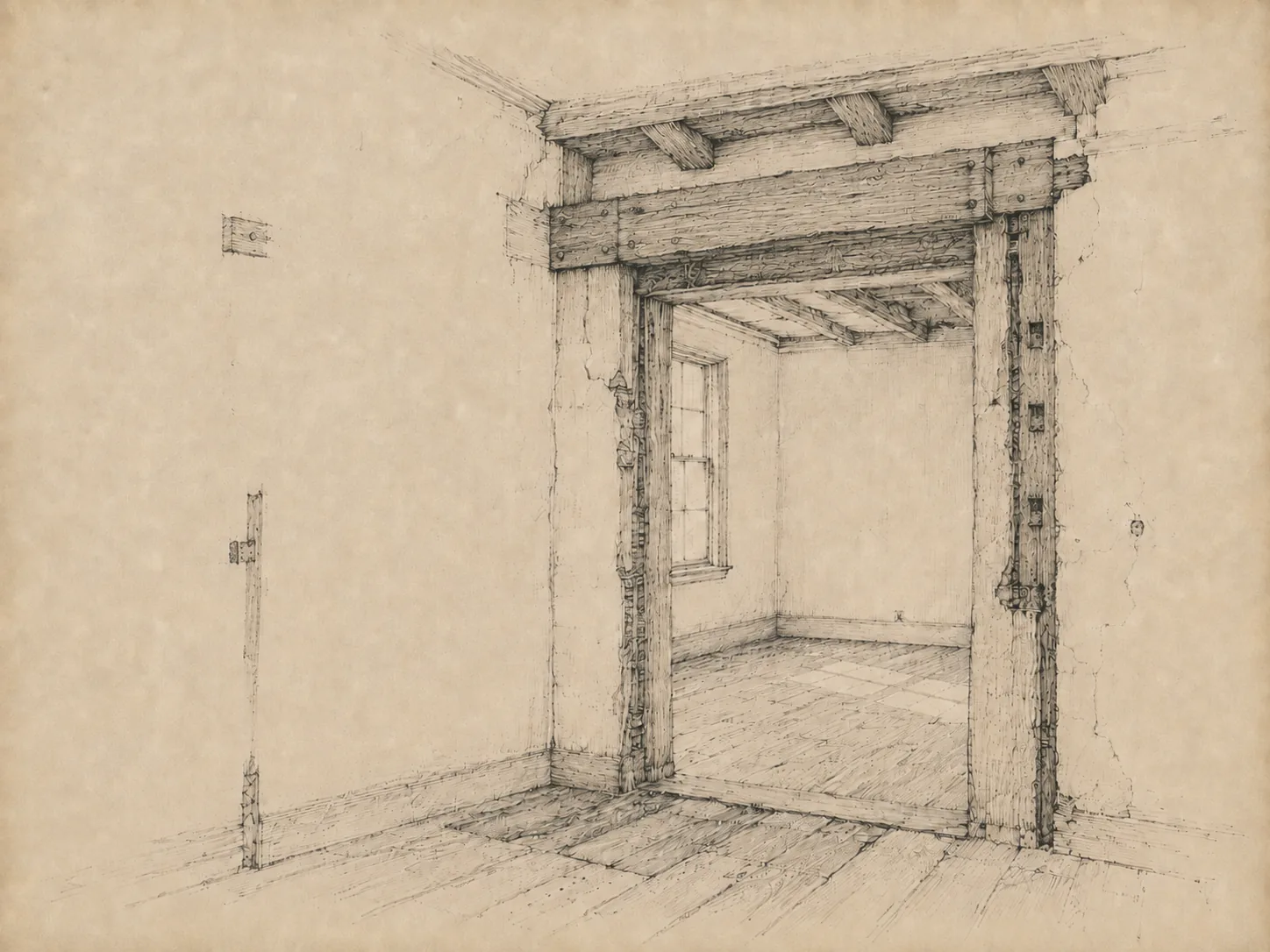
A house remembers differently than a filing cabinet.
A repair changes what the next person can build. A doorway changes the route through a room. A reinforced beam allows weight to move somewhere it could not before.
The past becomes part of the structure around what happens next.
Learning Returns
That was the more interesting possibility.
Useful work could do more than remain retrievable.
A decision could change the next starting point. A failed attempt could narrow the search. A lesson could change the questions asked when the problem returned.
The work could begin teaching back.
Selection Boundary
And learning mattered only if it could return to the work.
Use changed the next use. Failure changed the next question. New context changed what we thought we already understood.
But not everything should remain.
Memory without selection becomes clutter. Memory without context can mislead as easily as forgetting.
What deserves to persist is whatever improves future judgment without pretending the future will repeat the past.
Reflection / Release
The house does not contain the past.
The past changed the house.
Handoff
But even a durable house does not guarantee that everyone entering it sees the same thing.
The next distance was not between past and present.
It was between the different worlds people carried into the same word.