The Team Changed Shape
What happens when a team is no longer defined only by the people in it?
I went from managing nearly twenty people to essentially managing myself.
My first response was not philosophical.
I needed a team.
I did not want becoming a team of one to mean accepting a permanent loss of capability.
So I started rebuilding, one capability at a time.
MIDSPAN STUDY
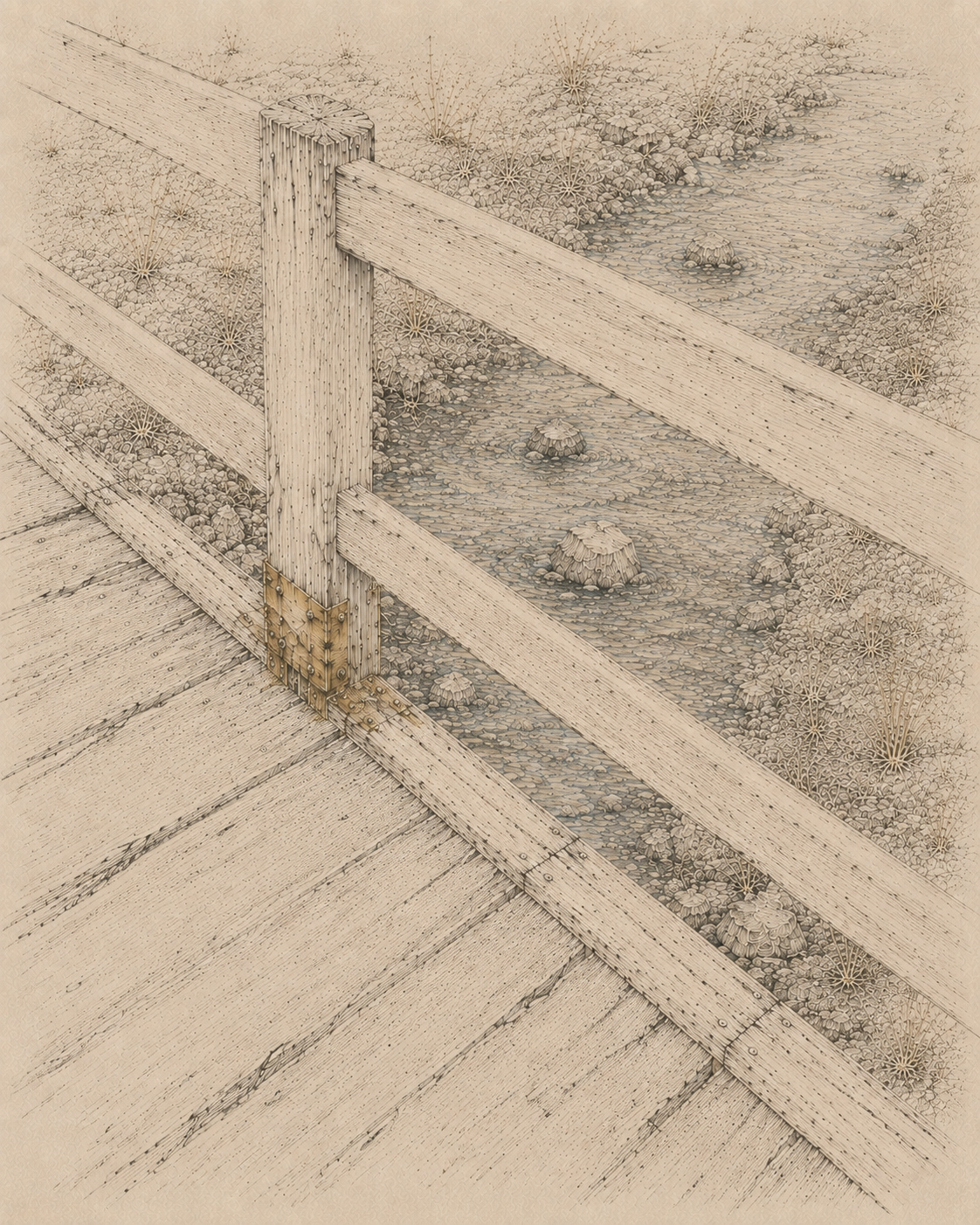
My first coworker was mediocre.
That is not false modesty.
The first useful version could do a few narrow things and still required too much supervision.
At first, the capabilities around me behaved more like isolated specialists than a team.
Each could do something useful.
I still carried most of the context between them.
Then one capability began helping another.
Planning could sit beside investigation.
Writing could sit beside analysis.
Context could travel instead of being rebuilt from scratch.
Slowly, the pieces began supporting one another.
And each new coworker brought more than another capability.
It brought another way of seeing the work.
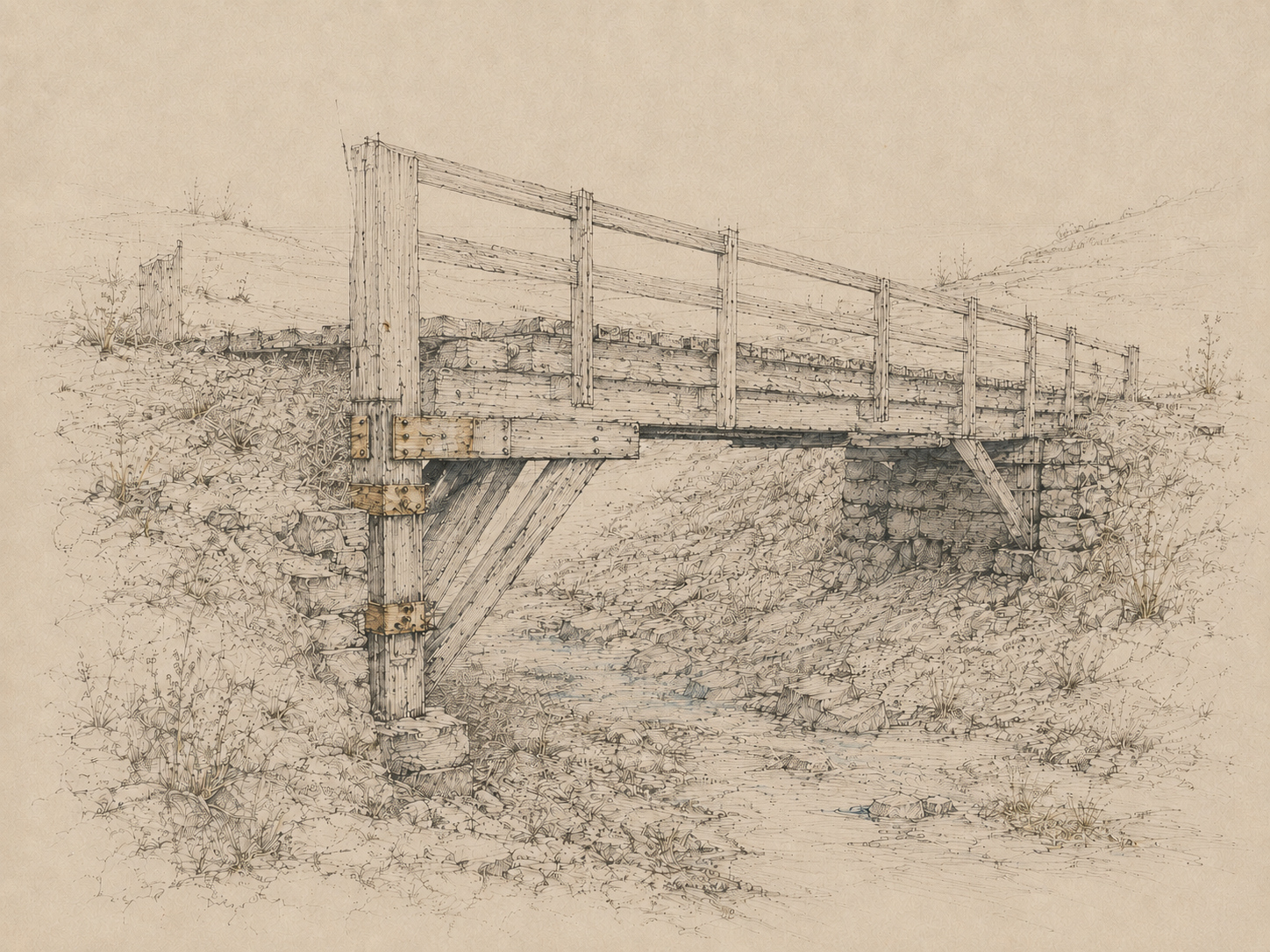
One held onto context another had lost.
One noticed a gap another had stopped seeing.
One challenged a conclusion that had begun to feel obvious.
The team became more useful when those differences could meet—and when what they learned could return to the work.
I also kept havingone-on-ones.
That may sound ridiculous.
But the best one-on-ones were never status meetings.
They were places to locate friction.
What is stuck?
What context is missing?
What keeps returning?
What should happen differently next time?
A specialist can change part of the game.
A team has to understand enough of the field to move together.
What surprised me was that the team I was rebuilding no longer looked like the one I had lost.
It included people.
It included agents.
Its strength came less from how many seats I could fill and more from how well different capabilities, contexts, and judgments could connect.
The team changed shape.
And it could carry more.
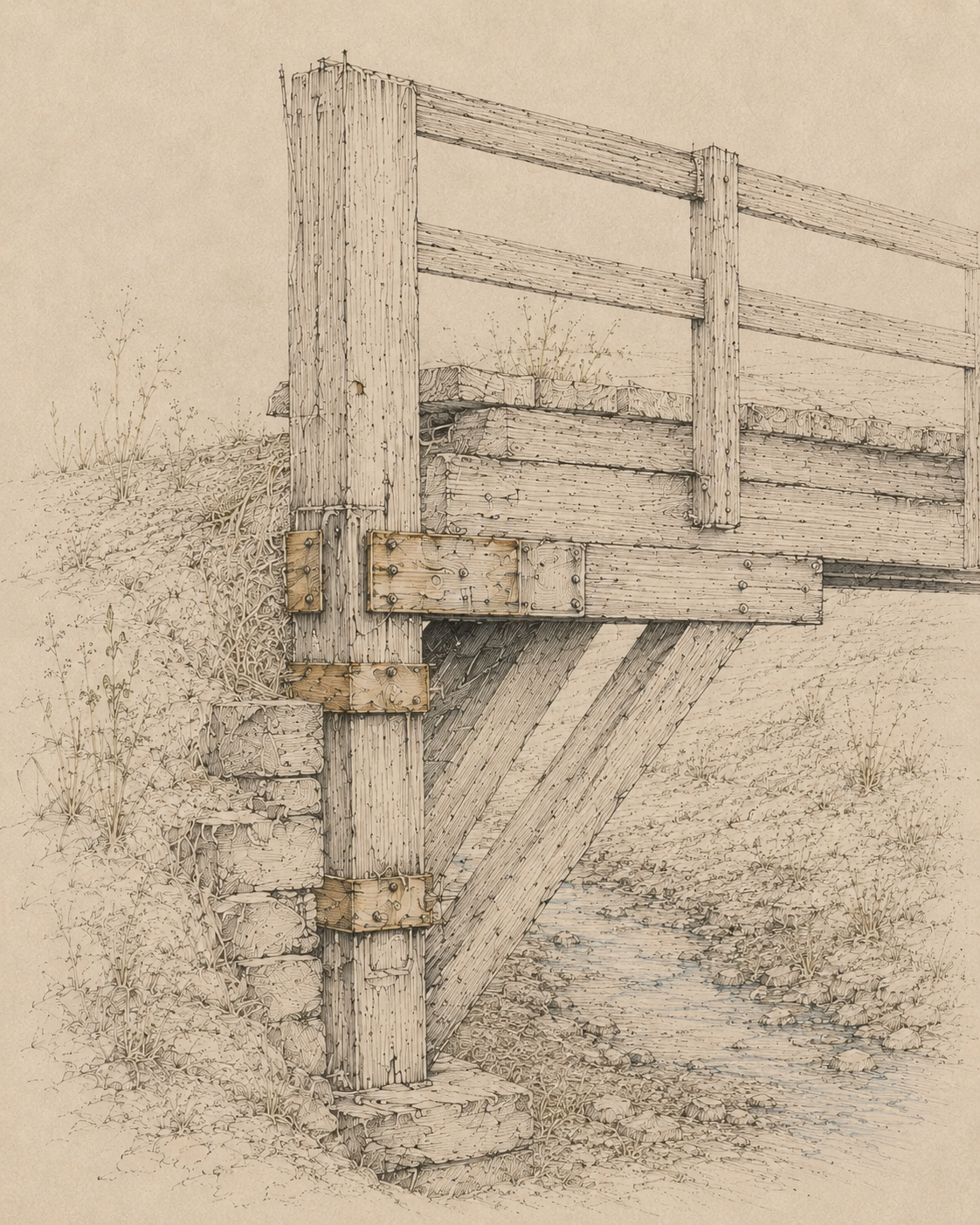
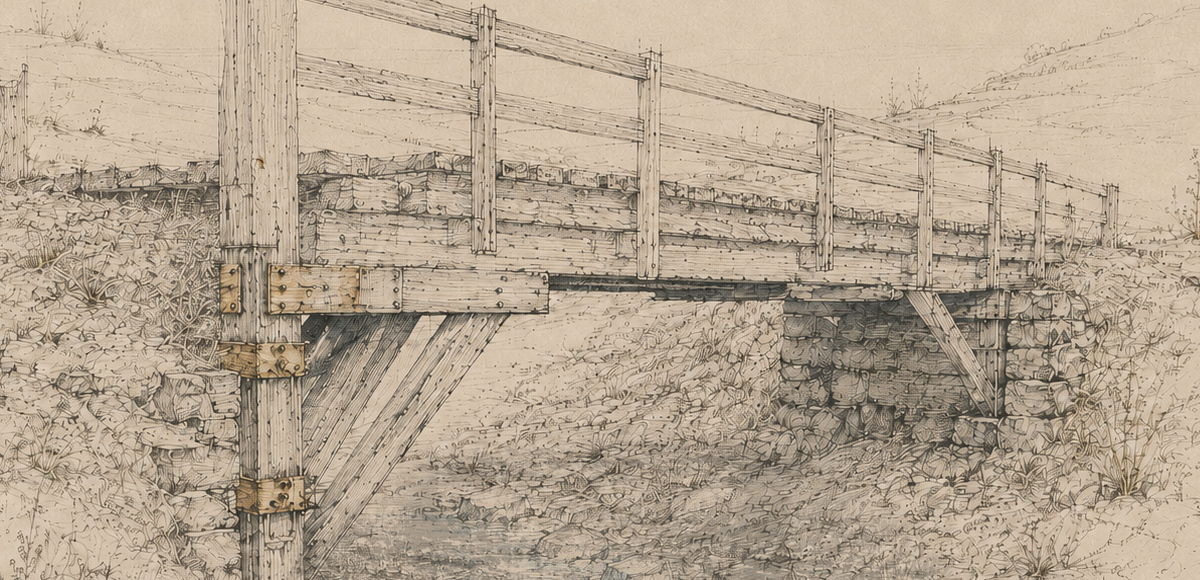
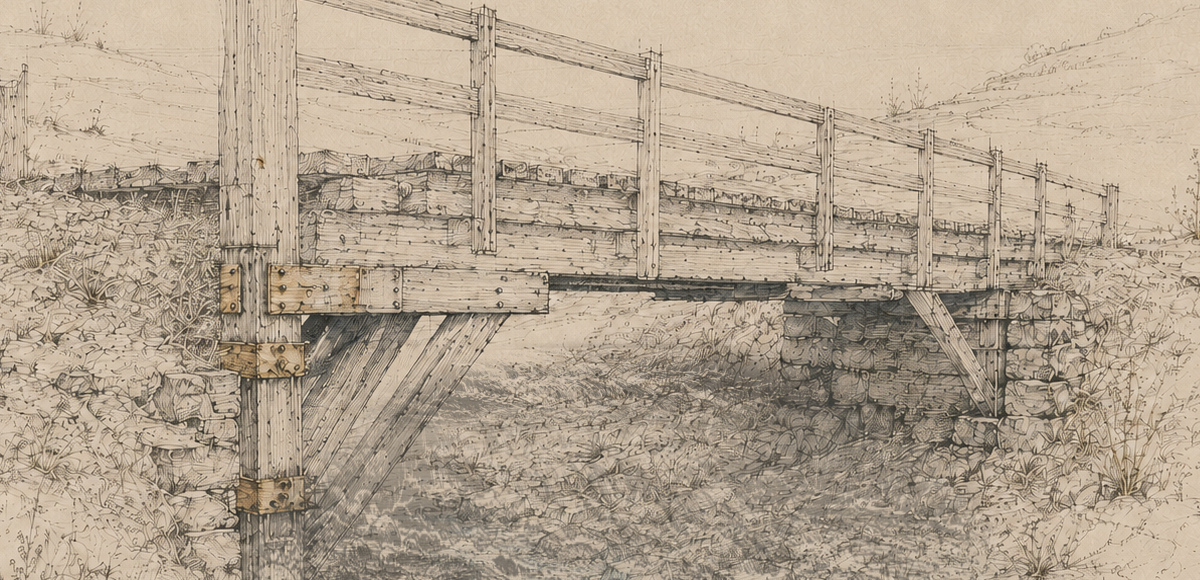
SPAN STUDY 01
A bridge does not erase the gap.
It makes the gap crossable.
No single member creates the span.
Some pieces carry weight.
Some stabilize.
Some connect.
Some were added later.
Repairs become part of the structure without requiring every piece to become the same.
The team began to feel similar.
Standards did not disappear.
Specialized judgment still mattered.
The work did not become effortless.
What changed was reach.
Fewer forms of work were inaccessible at the moment they became useful.
More capabilities could meet while the work was still moving.
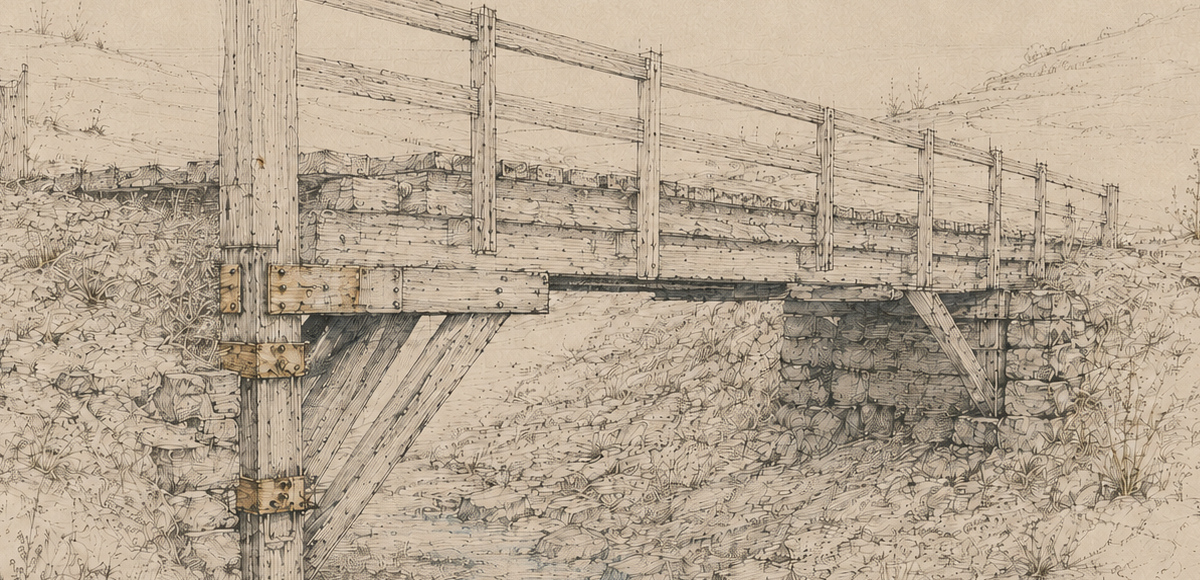
The shape changed.
The purpose did not.
The capacity expanded.